


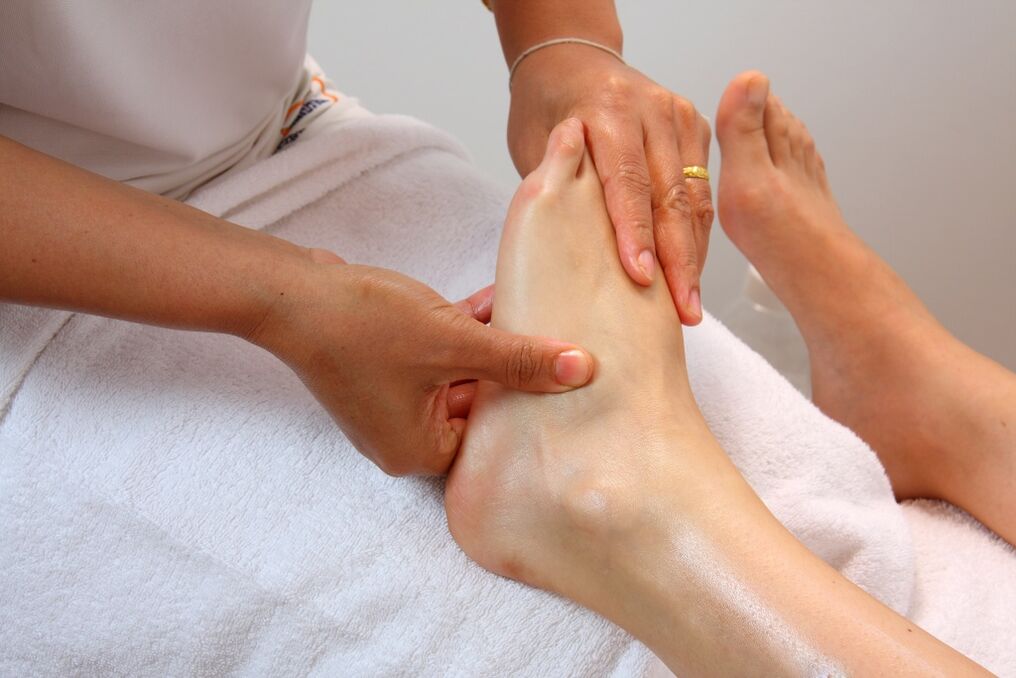
Arthrosis of the ankle joint develops at any age.Dystrophic changes lead to gradual immobilization of the joint.Treatment in the first stages leads to a positive result; the neglect of the process can be corrected with the help of surgery.
The ankle joint is one of the movable joints of the lower limb, which plays an important role in the process of walking.Physiologically, it is designed in such a way that a malfunction in one of the joints will entail a pathological effect on neighboring components.
The disease itself destroys connective and bone tissue.Arthrosis deforms the joint, deprives it of mobility and can lead to complete loss of motor ability.
Pathogenesis of ankle arthrosis
One of the complex joints in humans, shaped like a block, connects the fibula and tibia of the leg with the talus of the foot.The anatomical structure allows the joint to move in several planes, performing not only abduction forward, backward and to the side, but also to easily carry out circular movements.
Degenerative-dystrophic disease affecting the ankle joint often occurs not only in old age.Provoking factors can contribute to the development of the disease, intersecting with the underlying causes.Ankle arthrosis leads to serious health problems, depriving the patient of his ability to work.
The initial stage of the disease is characterized by pathological processes that destroy the cartilage layer, making it thin and inelastic.
Such a change in structure entails a restructuring of all components:
- the joint space between the heads of the bones becomes narrow;
- synovial fluid changes its chemical composition and thickens;
- the inner lining of the joint capsule becomes inflamed;
- the subarchidal layer of bone becomes dense and grows;
- with a prolonged course of the disease, osteophytes (bone growths) appear;
- the joint is deformed.
The whole process takes a long time.The initial phase is dangerous due to the smoothness of symptoms.The first changes can be stopped with early diagnosis, preserving all the functionality of the movable joint.
In later stages, with significant deformities and ineffectiveness of conservative treatment, surgery to replace the affected joint is recommended.
Causes of pathology
Arthrosis of the ankle joint develops when the following factors appear:
- With age, pathological changes in the body begin, triggering the process of destruction in the movable joint of bones.People over fifty years of age may be at risk, especially if the person leads an unhealthy lifestyle or has concomitant diseases.
- With the appearance of extra pounds, the load increases, which creates excessive pressure on the joint.The leg in the foot area begins to deform, and at the same time, the cartilage tissue, which acts as a natural shock absorber, wears out.
- Intense physical activity during work or sports training.The joint is subjected to regular increased pressure, which has a physiologically destructive effect.
- Injury to the ankle joint (fractures, dislocations, sprains, bruises) of varying degrees.Mechanical impact with the appearance of microtraumas changes the course of self-renewal processes in the joint.
- Dropping of the arches of the feet, which appears at birth or is acquired during life.Incorrect distribution of the load during movement and impaired spring function are compensated by the nearby joint, which is the ankle.
- Congenital deformities in the absence of the necessary treatment lead to adverse consequences for the body, including degenerative changes in joint tissue.
- Osteoarthritis of the ankle joint can be a direct consequence of wearing the wrong shoes, which ensure an incorrect position of the foot while walking.High heels, insufficient fullness of the model, complete absence of heels, uncomfortable lasts, mismatched shoe sizes “kill” your feet.
- Decreased muscle tone due to a sedentary lifestyle.
- There is a genetic predisposition.If relatives have been diagnosed with pathology, the person exposes himself to great risk by not following the rules of prevention.
- Autoimmune diseases provoke arthrosis.The basis of this group of diseases is the self-destruction of the body by its own cells.
- Metabolic disorders affect the joints, creating a shortage of “building” material in the form of microelements.
- Pathologies that occur when the endocrine glands malfunction: diabetes mellitus, hypothyroidism and others.
- Hormonal disorders during the period of body restructuring in older women.
Signs of the disease
Arthrosis of the ankle joint has a hidden onset.The symptoms do not manifest themselves clearly, therefore, the patient may not pay attention to the unpleasant sensations in the pelvic area during active movements.The first stage is discovered by chance; a person does not seek medical help during this period.
At the initial stage, pain in the ankle area appears during fast running, long walks, and jumping.After rest, the pain goes away and does not bother the patient at rest.The stage of dystrophic changes in cartilage lasts for years; at the next stage, ankle arthrosis affects the bone layer.
In the second phase of arthrosis, a clicking sound appears when moving the foot, and the pain becomes more intense during exercise.In the morning, after waking up, there is slight stiffness in the joint, which goes away after the patient walks a little.
As the process worsens, the joint begins to deform.The patient develops a barely noticeable lameness on the affected leg, thus the body tries to physiologically adapt to regular pain during movement.Gradually, limited range of motion of the ankle joint appears.
When a significant narrowing of the joint space occurs, the pain syndrome becomes regular.A change in the shape of the joint is visually noticeable; because of this, shortening of the diseased lower limb is possible.
The advanced third stage of the ankle joint is characterized by severe crepitus and contracture of the joint.Pain in the ankle joint bothers you not only during the day, but also at night, during sleep.A person cannot walk without rehabilitation equipment (canes, crutches, walkers), performance is impaired, and this stage most often leads to disability.
At any stage of arthrosis, an inflammatory process may appear that develops on the inner surface of the joint capsule.
The symptoms are:
- throbbing pain in the area of the sore ankle;
- swelling of the soft tissues in the area of the inflamed bone joint;
- redness of the skin;
- local temperature increase.
How to treat ankle arthrosis
An orthopedist makes a diagnosis and prescribes treatment.Treatment procedures, except for joint injections and some physiotherapy procedures, are carried out on an outpatient basis.Therapeutic procedures are prescribed in combination and carried out in parallel to each other to enhance the effect.
It is impossible to restore damaged tissue and correct deformation; the main role of treatment is to stop the disease process and maintain the condition of the composition at the same level, preventing deterioration.Strict adherence to the doctor’s recommendations will ensure the desired effect.
Treatment with medications
- Nonsteroidal anti-inflammatory drugs are used in the form of tablets or ointments for external use.NSAIDs simultaneously have an anti-inflammatory effect and an analgesic effect.The dosage and regimen are prescribed by a medical specialist, taking into account individual indicators.It is not recommended to take drugs from this pharmacological group on your own; NSAIDs have a lot of side effects, especially on the gastrointestinal tract.
- Chondroprotectors replenish the joint with all the missing chemical elements, which stop the destruction process and restore the cells of the joint.To achieve a lasting therapeutic effect, it is necessary to take chondroprotectors for a long time.
- Glucocorticoids are used for developed inflammation.Hormonal drugs act on acute pain, allergic reactions, and inflammation.They can be injected intramuscularly or directly into the diseased joint to perform a blockade.
Motor mode
Arthrosis of the ankle joint forces you to change your entire lifestyle.Physical activity should be measured.It is forbidden to overload the joint with long walks, intense physical exercise, or carry weights.Active movements should alternate with rest; prolonged static load is prohibited.
To prevent deterioration of the ankle joint, it is useful to wear correct orthopedic or anatomical shoes.To achieve a shock absorption effect, orthopedic insoles are used daily.
Preventive orthopedic bandages protect the joint from excessive load and provide local compression and micromassage effects.If injuries have previously occurred or arthrosis is in a severe stage, the priority choice will be orthoses with metal inserts that reliably fix the joint.
Diet therapy
The principles of proper nutrition should form the basis of the diet of a person with joint disease.
The following should be excluded from the menu:
- fatty meat and fish broths;
- smoked and sausage products;
- canned food and semi-finished products;
- sugar and confectionery;
- sweet carbonated drinks and coffee;
- alcoholic drinks;
- mayonnaise and sour cream with high fat content.
You need to eat in small portions to monitor your weight and prevent extra pounds.These measures will ensure the prevention of additional stress on the joints and the supply of necessary substances to nourish the joint cells in sufficient quantities.
Therapeutic exercise
Physical exercises for therapeutic purposes should be present during joint destructuring.The exercise therapy complex is compiled by a medical specialist - physiotherapy instructor.With the correct technique and therapeutically dosed load in the area of the affected ankle, blood circulation improves, muscle tone increases, and range of motion increases.
In order for classes to bring only benefits, you need to remember when you cannot engage in physical therapy:
- acute period accompanied by inflammation;
- the appearance of pain when performing exercises in the ankle;
- movements, number of repetitions and range of movements must be strictly agreed with the doctor.
To achieve good results you need to be patient.Regular exercise will smoothly bring the ankle joints into good shape.
Physiotherapeutic procedures
- Electrophoresis is prescribed to introduce medications into the patient's body using electric current.
- Exposure to pulsed magnetic current is carried out in courses of twenty procedures, then a break is taken for two months.During the entire period of non-use of the magnet, the cumulative effect of the completed course will remain.
- Infrared radiation is prescribed to the sore leg, which will provide a lasting anti-inflammatory and analgesic effect.

Folk remedies
The use of alternative medicine recipes from available natural ingredients can be used for patients with arthrosis.
- It is useful to apply crushed garlic with vegetable oil to the sore joint for 8 hours, spreading it in a thin layer.A herbal anti-inflammatory will help relieve pain and inflammation.
- Raw potatoes are grated and used as compresses, placed on the ankle.The product will relieve swelling and reduce pain in the joint.
- Dry raw materials of hops and St. John's wort are mixed one dessert spoon at a time, and fifty milliliters of petroleum jelly are added to the resulting mass.The resulting ointment is applied in the morning and evening to the sore spot.
Surgical intervention for ankle arthrosis
The last stages of the disease, in which complete blocking of the joint occurs, cannot be treated with conservative means.This fact is due to the fact that the developed deformation is irreversible.In this case, arthrosis of the ankle joint can only be treated with surgery.
The therapy is based on the replacement of a worn-out joint with an artificial prosthesis, which will allow a person to maintain independent movement and vital activity.The replaced joint will last more than ten years, depending on the quality of the material from which it is made.
Preventive measures
Preventing a disease is always easier than treating it later.An active lifestyle without bad habits is the key to healthy joints.Staying at an optimal weight at any age is useful not only for a beautiful appearance, but also for ridding the body of unwanted stress on all organs and systems.
Much attention must be paid to shoes:
- models must be of the correct anatomical shape;
- made from natural materials;
- the use of orthopedic insoles will ensure proper distribution of the load on the lower limb;
- size and fullness must match the foot;
- shoes should be appropriate for the season to prevent hypothermia, which negatively affects the joints.
At the first sign of discomfort in the ankle joint or pain when moving, you should consult a doctor for an early diagnosis.If the pathology is noticed in time, it can be easily treated, which will allow you to avoid severe development and maintain a beautiful gait until old age.